The Central Board of the Reserve Bank of India (RBI), which met today, decided to transfer the highest ever surplus of Rs 2.11 trillion to the government for the financial year 2023-24 – more than double the Centre’s budgeted figure as dividends from the central bank and other public sector undertakings (PSUs) – despite maintaining the contingent buffer at the peak level of 6.5 per cent.
The RBI transferred a surplus of Rs 87,416.22 crore in the previous financial year.
In 2018-19, after the new economic capital framework (ECF) was adopted as per the Bimal Jalan Committee suggestion, the RBI transferred a surplus of Rs 1.76 trillion. The ECF devised a method to determine how much surplus the central bank should transfer to the government.
Between 2018-19 and 2021-22, the RBI maintained the contingent risk buffer (CRB) of 5.5 per cent of its balance sheet due to macroeconomic challenges amid a once-in-a-century pandemic and ‘to support growth and overall economic activity’, and 6 per cent in 2022-23. In FY24, it decided to increase the buffer to 6.5 per cent – the higher end of the Jalan Committee proposed range of 5.5-6.5 per cent of the RBI’s balance sheet.
“As the economy remains robust and resilient, the Board has decided to increase the CRB to 6.50 per cent for FY 2023-24,” the central bank said.
According to economists, the larger surplus was due to higher income in FY24, both from domestic and foreign assets, which increased its profit.
“The dividend [surplus] payout is not just a function of the RBI’s profits, but also of capital provisions, as per the Economic Capital Framework (ECF) adopted in 2019,” said Shreya Sodhani, regional economist, Barclays.
“We had noted earlier that the provisioning from income to meet the minimum regulatory requirement was small in FY23-24, despite the 11.4% growth in the balance sheet. This was because the RBI had already maintained a larger-than-required contingency fund in the year prior (FY22-23, at 6%), resulting in very little profits being set aside as capital for meeting the capital adequacy norms for FY23-24,” Sodhani said.
“The amount of Rs 2.11 trillion is well above the budgeted figure of Rs 1.5 trillion in the Interim Budget for FY2025 under dividends and profits, which includes dividends from PSUs,” said Aditi Nayar, chief economist, ICRA.
According to Nayar, the higher-than-budgeted RBI surplus transfer would help to boost the Government of India’s resource envelope in FY2025, allowing for enhanced expenditures or a sharper fiscal consolidation than what was announced during the Interim Budget for FY2025.
“Increasing the funds available for capex would certainly boost the quality of the fiscal deficit. However, the additional spending may be difficult to incur within the eight-odd months left after the Final Budget is presented and approved by Parliament,” Nayar added.
The RBI board reviewed the global and domestic economic scenario, including risks to the outlook.
The board discussed the working of the Reserve Bank during the year April 2023 – March 2024 and approved the Reserve Bank’s Annual Report and Financial Statements for the year 2023-24.
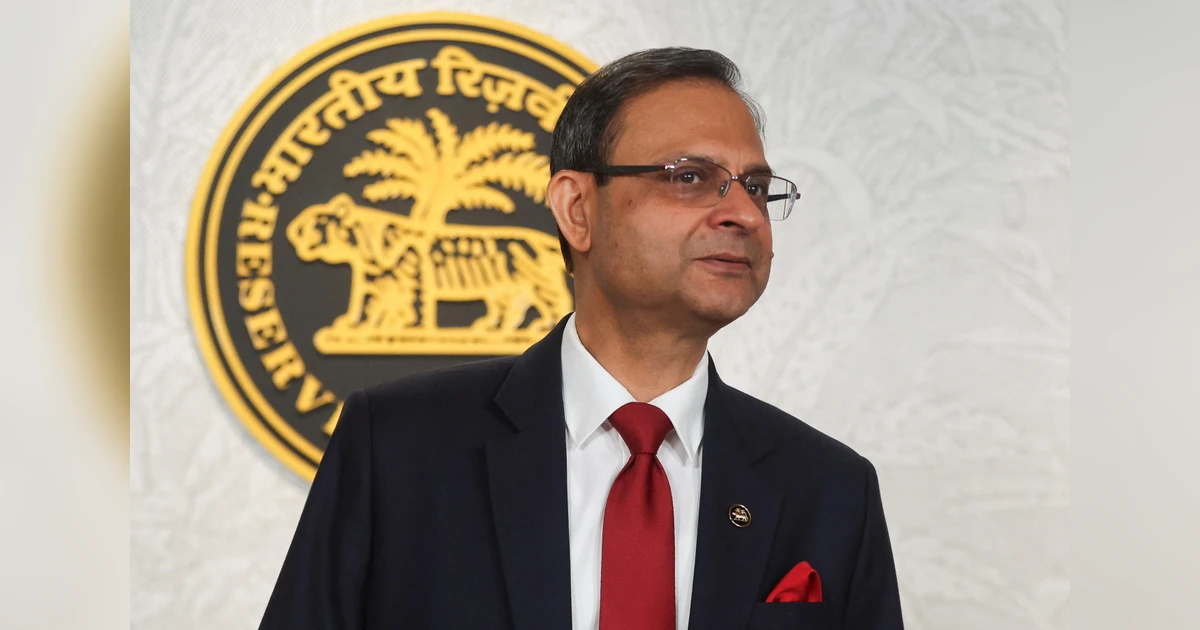
The board meeting, chaired by governor Shaktikanta Das, was attended by all the four deputy governors, the government nominees, and other members.
First Published: May 22 2024 | 8:35 PM IST