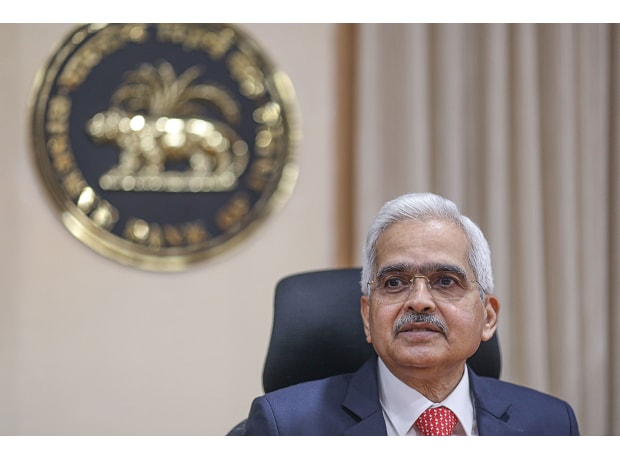
Consistently high inflation may pose risks to economic growth and it is therefore important for South Asian countries to work towards price stability, said Reserve Bank of India Governor Shaktikanta Das on Friday.
“While the recent softening of commodity prices and supply-side bottlenecks should help in lowering inflation going ahead, risks to growth and investment outlook may rise if inflation persists at high levels,” Das said at an International Monetary Fund conference on South Asia’s path to growth.
“Prioritising price stability may therefore be the optimal policy choice for the South Asian region in the current context.”
With inflation having remained above its tolerance band for several months, the Indian central bank joined the ranks of other global monetary authorities in 2022 by hiking interest rates aggressively to tame consumer prices.
The RBI, which embarked on its latest monetary tightening cycle in May 2022, raised the repo rate by a total of 225 basis points in the previous calendar year.
“During the first three quarters of 2022, food price inflation in South Asia averaged more than 20 per cent. The region’s heavy dependence on imported fossil fuels has made it vulnerable to imported fuel inflation,” Das said.
“For successful disinflation, credible monetary policy actions accompanied by targeted supply side interventions, fiscal trade policy and administrative measures have become the key instruments…This approach to disinflation, however, needs to be mindful of the rising risks to growth outlook in an environment of deteriorating prospects for global growth and trade activity,” he said.
Das’s reminder of the need to be mindful of risks to economic growth comes at a time when the RBI has slowed the pace of its rate hikes amid indications of easing inflation. Some members of the Monetary Policy Committee have also recently favoured pauses in monetary tightening as well as a different stance from the current one which withdraws accommodation.
While acknowledging the detrimental impact of the pandemic and the war in Ukraine on growth prospects in South Asia, Das emphasised the key role to be played by regional cooperation.
“Regional cooperation could be a win-win situation for all countries of the region. Intra-regional trade in the South Asian region is only one-fifth of its potential. This implies that the annual shortfall—this has been calculated by the World Bank—to be in the region of $44 billion,” Das said.
A key risk Das flagged was the climbing levels of external debt for some South Asian nations. External debt, which was already elevated in low and middle-income countries in the pre-pandemic period, jumped sharply after that. External debt of South Asian countries rose to $9.3 trillion in 2021 from $8.2 trillion in 2019, he said.
“It is estimated that total external debt service payments on public and publicly-guaranteed debt by poorest countries may rise by 35 per cent to about $62 billion in 2022 and to remain high up to 2024 due to rising global interest rates and the compounding of interest on DSSI (debt service suspension initiative) debt service deferrals,” Das said.
Citing a World Bank study, Das said that 60 per cent of 73 eligible debt service suspension initiative countries were at high risk of debt distress or were already facing it.
As part of efforts to propel economic growth in South Asia, Das listed out certain priority areas including stronger cooperation for energy security, cooperation towards green energy, the promotion of tourism and boosting productivity.
Das said that recent initiatives by the Indian central bank such as permission of trade settlements with other countries in rupees and the launch of the RBI’s central bank digital currency pilot could be areas of greater cooperation in the future.